








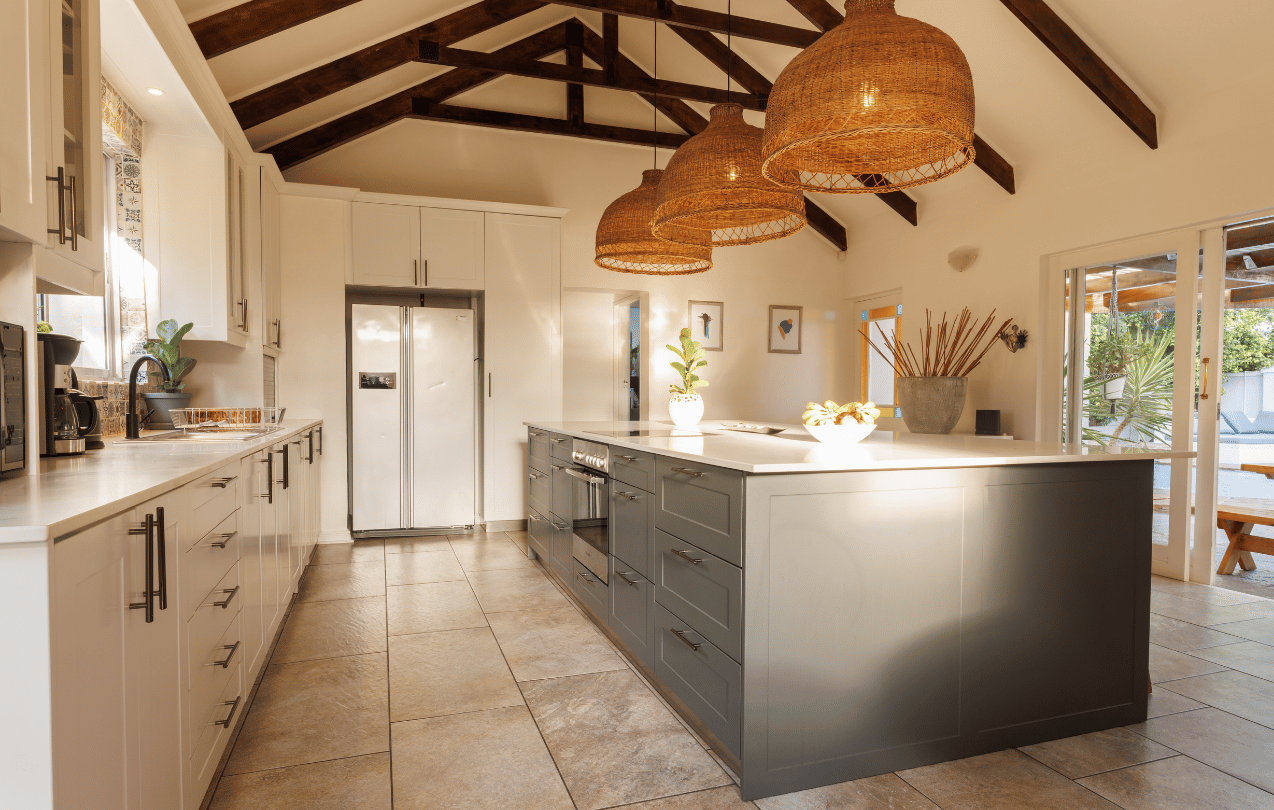

Miami kitchens look effortless when the design is right—but coastal humidity and salt air put every appliance to the test. If your refrigerator sits near a terrace door, lives in a tight condo enclosure, or works overtime during entertaining season, performance depends on more than the name on the panel. It comes down to smart specs, proper airflow, thoughtful placement, and consistent care.
This guide breaks down what changes in Miami's 80%+ humidity environment, which risks are real, and how to protect Sub-Zero kitchen appliances with a practical plan you can use before ordering, during installation, and throughout ownership. You'll also see how our expert team helps you get the details right—through climate-informed guidance, technical planning support, and installation coordination—so your kitchen performs as beautifully as it looks and you understand your coverage options.
Key Takeaways
- High humidity and salt air accelerate condensation, gasket wear, and exterior corrosion—especially when the design doesn't plan ventilation and placement.
- Sub-Zero delivers long-term durability, but performance in Miami depends on the correct specs and installation details—clearances, airflow, and placement.
- A simple protection plan spec bright, install right, maintain consistently protects your investment, reduces avoidable service calls, and helps you know when a covered appliance issue may require repair.
What Miami's Climate Does to Refrigeration
Miami's coastal environment changes the day-to-day workload on your refrigerator. Before you assume a performance issue is a product problem, it helps to understand the specific climate stressors at play—and which symptoms they typically cause.
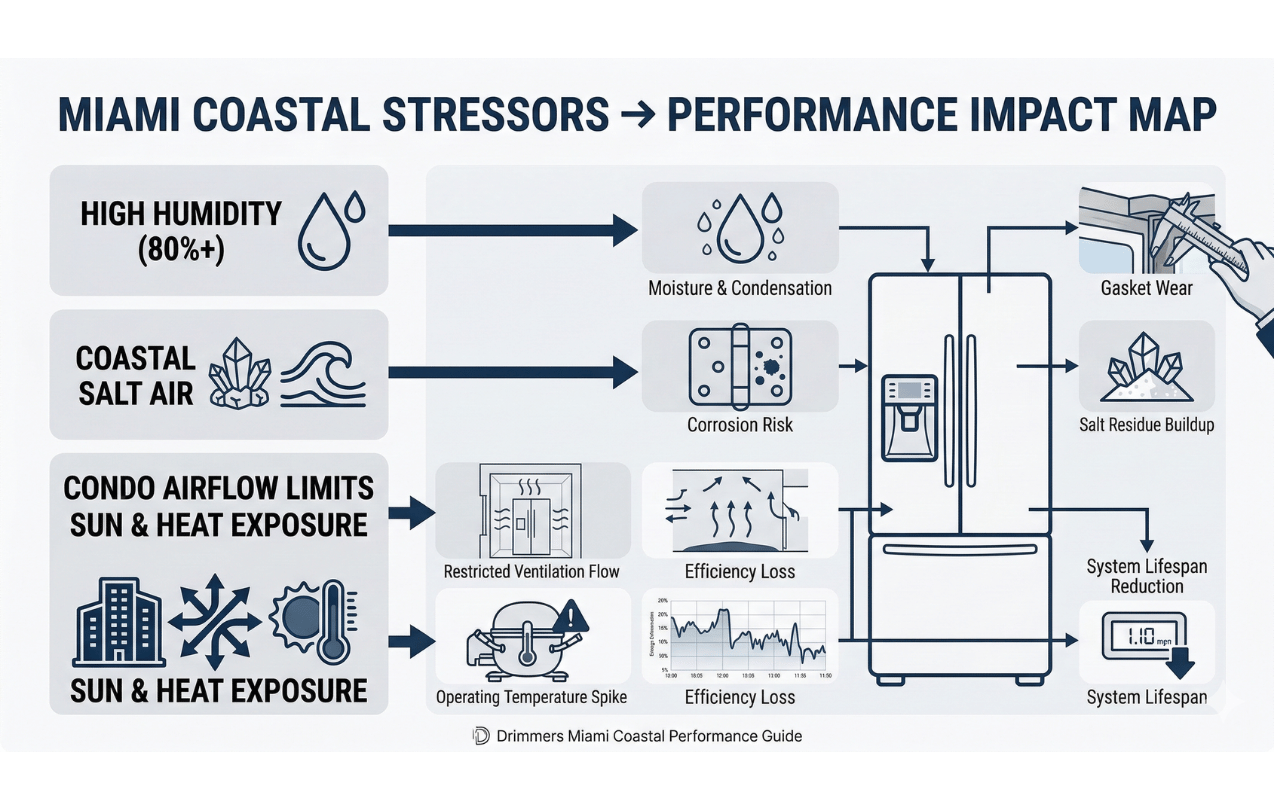
The Big Four Coastal Stressors
- Humidity: Warm, moist air increases the risk of condensation, especially around doors and seals. When moisture lingers, it can also contribute to odors or mildew in overlooked areas.
- Salt air: Coastal air carries salt that can raise the risk of surface corrosion on exposed metal and hardware—most noticeably near open-air terraces and waterfront properties.
- Condo airflow realities: Many high-rises rely on tight enclosures and strict build constraints. When ventilation is limited, heat can build up around the unit, making the compressor work harder.
- Usage patterns: Frequent door openings, entertaining, and "second-home" downtime all change how refrigeration behaves. More openings bring in humid air; long idle periods can create moisture issues if maintenance falls behind.
How Sub-Zero Kitchen Appliances Hold Up in Coastal Environments
Sub-Zero designs built-in refrigeration platforms for long service life when the installation environment supports them. In coastal Miami, brand pedigree matters less than day-to-day performance under real conditions. The most significant difference comes down to whether you control the variables such as humidity and salt air that put the system under pressure, and whether you catch early warning signs before they turn into bigger problems.
Here's what to highlight without over-claiming:
- Temperature stability: Reliable performance depends on a well-managed installation environment especially airflow and heat control around the unit.
- Robust sealing and serviceability: In high humidity, seals work harder. Good gasket care and consistent maintenance matter as much as build quality.
- Built-in and integrated formats: Seamless design is the goal, but it also makes clearances and ventilation planning non-negotiable.
Choosing the Right Sub-Zero Configuration for Miami Homes and High-Rises
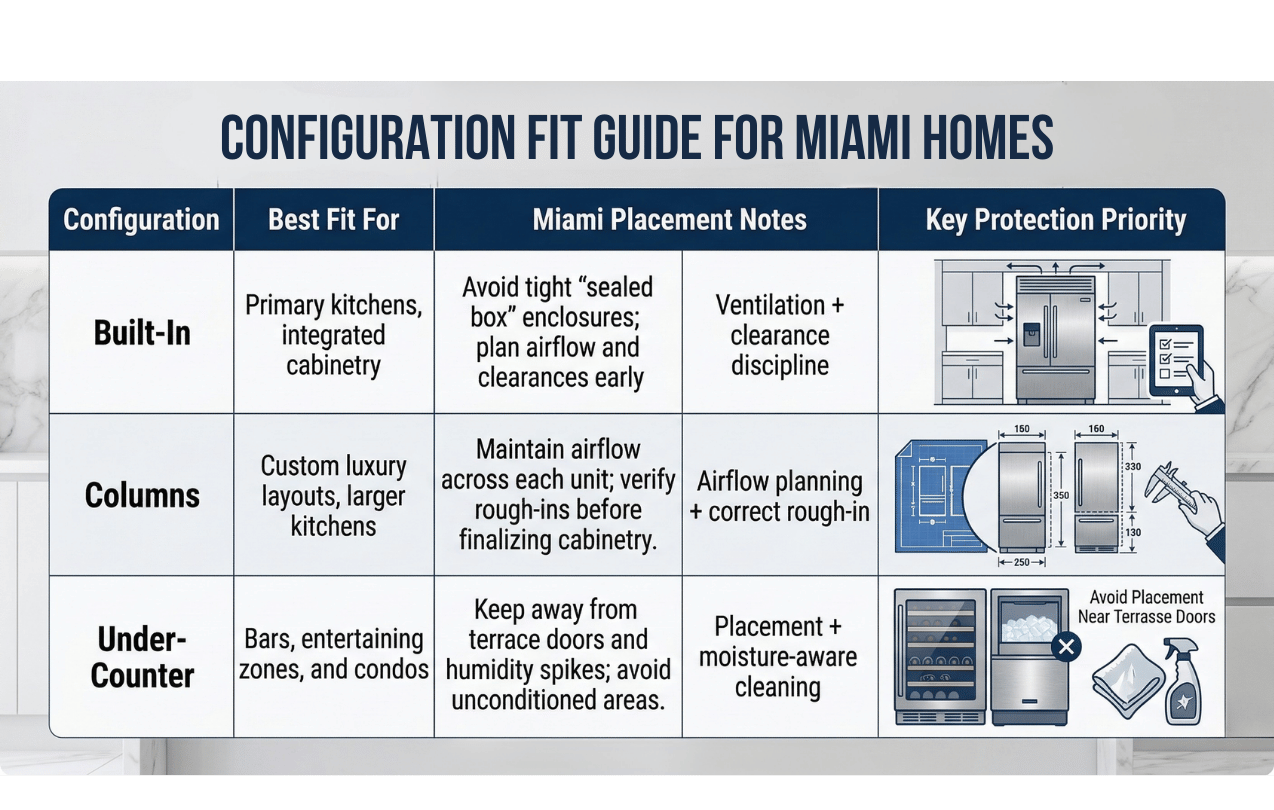
Your configuration choice affects airflow requirements, placement flexibility, and long-term appliance protection especially in Miami's humidity and salt-air conditions.
Built-In vs. Columns vs. Under-Counter
- Built-in refrigeration: A go-to option for luxury, integrated kitchens. It performs best when you plan ventilation, clearances, and cabinetry details early before design decisions lock in a tight enclosure.
- Column units: Ideal for custom layouts and high-end renovations that require separate refrigerator and freezer columns. Columns offer flexibility, but they still depend on an enclosure design that supports proper airflow and correct rough-in dimensions.
- Under-counter refrigeration: Great for entertaining areas, bars, and condos with limited space. Placement matters more than most people expect installing under-counter units too close to terrace doors or warm transitional zones can increase moisture stress.
Sizing and Layout (Avoid the Two Most Common Miami Mistakes)
1. Choosing Size First
Built-in and integrated designs look seamless, but they require precise planning. When clearances get adjusted late in the process, airflow suffers—and performance can follow.
2. Placing Refrigeration in Heat or Humidity "Pinch Points."
Common pinch points include:
- Next to ovens or rangetops without adequate separation
- Near the terrace doors, where humid air rushes in
- In transitional hallways or warmer interior zones
- In waterfront properties with consistently higher salt-air exposure
Configuration Fit Guide for Miami Homes
The Coastal Protection Plan
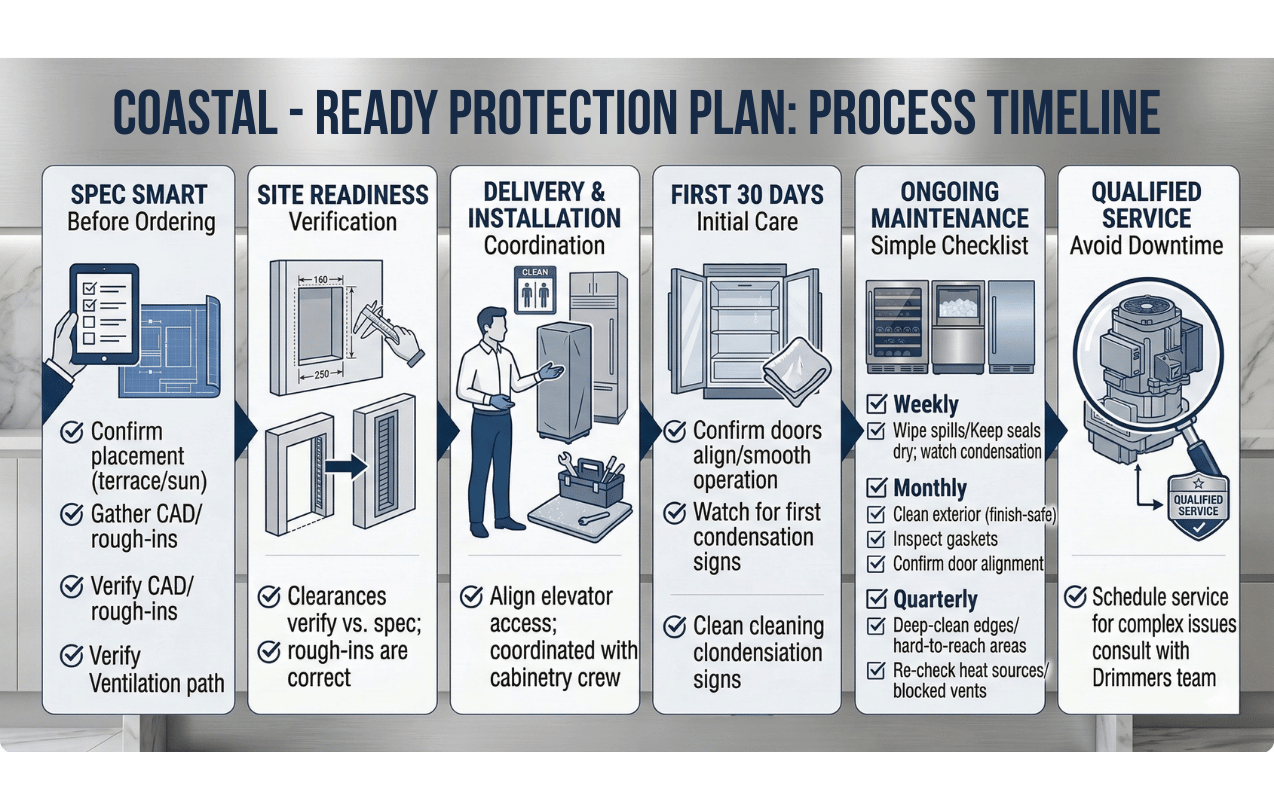
In Miami, you get the best results when you treat refrigeration as a system—the appliance plus its environment. Use this three-step plan to prevent the most common humidity and salt-air issues before they start.
Step 1: Spec Smart (Before You Order)
Use this pre-order checklist to make sure your specs match real coastal conditions:
Confirm the Location
- How close is the installation to terrace doors, balconies, or waterfront exposure?
- Does direct sun hit the cabinetry wall during peak hours?
- Do you notice humidity spikes in this zone (especially with indoor/outdoor flow)?
Collect the Right Planning Assets
- CAD drawings, rough-in dimensions, and clearance requirements
- Cabinetry integration details (panels, toe-kick, trim)
Plan the Surrounding Conditions
- Cabinet construction, panels, and nearby heat sources
- Ventilation path details—verify the plan instead of assuming airflow "will work out.t"
Standardize for Multi-Unit Projects
- Align rough-ins and specifications across units to reduce surprises during installation windows.
Our expert team helps you apply climate-aware guidance and technical planning so your specs fit Miami realities—not generic assumptions.
Step 2: Install Right (Ventilation, Clearances, Placement)
In Miami, installation details often explain the "mystery problems" people blame on the unit.
Why "Built-In" Doesn't Mean "No Airflow Needed"
Built-in refrigeration still requires correct ventilation and clearances. When airflow is restricted, the system can run hotter, cycle more frequently, and exhibit symptoms that appear to be product issues.
Verify at Rough-In—and Again at Final Install
- Clearances match the spec (not "close enough")
- Ventilation stays intact after installing cabinetry, panels, and trim
- Finish details don't pinch the unit or block air pathways
- Account for heat sources (cooking appliances and sun exposure) in the layout
Placement Rules of Thumb for Miami
- Limit direct exposure to patio/terrace air when possible
- Create separation from cooking heat—especially in compact condo kitchens
- Avoid sun- and humidity-spike zones near indoor/outdoor transitions
Why Coordination Prevents Rework
When delivery timing, cabinetry readiness, elevator access, and installation scheduling align, you avoid last-minute compromises—tight fits, rushed paneling, and blocked vents—that can hurt performance and lead to early replacement decisions you could have avoided.
Step 3: Maintain Consistently (A Simple Checklist)
You don't need an intense routine. You need steady habits that manage moisture and protect finishes.
Weekly
- Wipe spills promptly and keep door seals clean and dry
- Watch for recurring condensation around doors, especially after entertaining
Monthly
- Clean exterior surfaces with finish-appropriate products (skip harsh abrasives)
- Inspect gaskets for debris, stickiness, or uneven sealing
- Confirm doors close smoothly and align properly
Quarterly
- Deep-clean edges and hard-to-reach areas where moisture collects
- Re-check the surrounding area for new heat sources, blocked vents, or airflow changes
Cleaner Guidance
- Use gentle, non-abrasive cleaners suited to the finish
- Avoid "miracle coatings" and aggressive chemicals that can damage surfaces and seals
- When in doubt, stick to manufacturer-safe methods: soft cloths and mild solutions
When Service Matters (Avoid Downtime)
Use qualified service support when built-in integration and panels add complexity—especially if symptoms persist after you confirm airflow and seal cleanliness. Coastal-related triggers often include gasket/seal problems, corrosion on exposed hardware, and performance complaints tied to ventilation and clearances. When you schedule service, ask about replacement parts and lead times so you can plan around your kitchen timeline.
Getting Coastal-Ready Results in Miami Kitchens
In coastal Miami, great refrigeration performance starts with planning—not guesswork. Treat humidity and salt air as real design inputs, match your Sub-Zero appliances to the space early, and verify clearances and airflow before you place an order. When delivery and installation stay coordinated, you avoid last-minute compromises that can create long-term performance headaches.
To keep the process efficient, bring measurements, a few photos of the installation area, and any cabinetry or finish plans you already have—plus notes on terrace/waterfront exposure and building delivery rules. If you’re working from drawings, share CAD or rough-in dimensions, your preferred configuration, and timeline milestones. With that information, our expert team can guide you on the details that matter most for coastal performance—and help you understand which support and coverage may apply if something needs attention down the line.
Ready to start planning your kitchen? Request a quote to see Sub-Zero in action and get expert guidance tailored to coastal living.
Frequently Asked Questions
1. What issues are most common with Sub-Zero refrigerators over time?
In coastal environments, the most common issues tend to involve door seals, moisture management, and restricted airflow—not a lack of cooling power. If you notice condensation, changes in cycling, or a drop in efficiency, first confirm clearances, ventilation, placement, and gasket cleanliness before assuming a product failure or scheduling a repair visit.
2. Do Sub-Zero refrigerators rust in Miami's salt air? What should I watch for?
Salt air can increase corrosion risk on exposed metal surfaces and hardware, especially near open-air terraces and waterfront locations. Look for early surface spotting, hardware wear, or areas where salty moisture collects. Thoughtful placement, finish-appropriate cleaning, and limiting direct exposure can significantly reduce risk.
3. Which maintenance steps matter most for appliance protection in high humidity?
Stick to the moisture basics: keep door seals clean and dry, wipe condensation-prone areas, use finish-safe cleaning methods, and periodically confirm vents remain clear. Consistent, simple routines do more than occasional deep cleans—and they help you avoid unexpected service calls.
4. Do built-in or column units require professional installation, and what can go wrong if they aren't installed correctly?
Professional installation is key because built-ins and columns rely on precise clearances, proper ventilation paths, and accurate cabinetry/panel integration. When those details are off, you may see heat buildup, lower efficiency, moisture-related symptoms, door alignment issues, and avoidable service calls—sometimes leading homeowners to replace an item prematurely.