


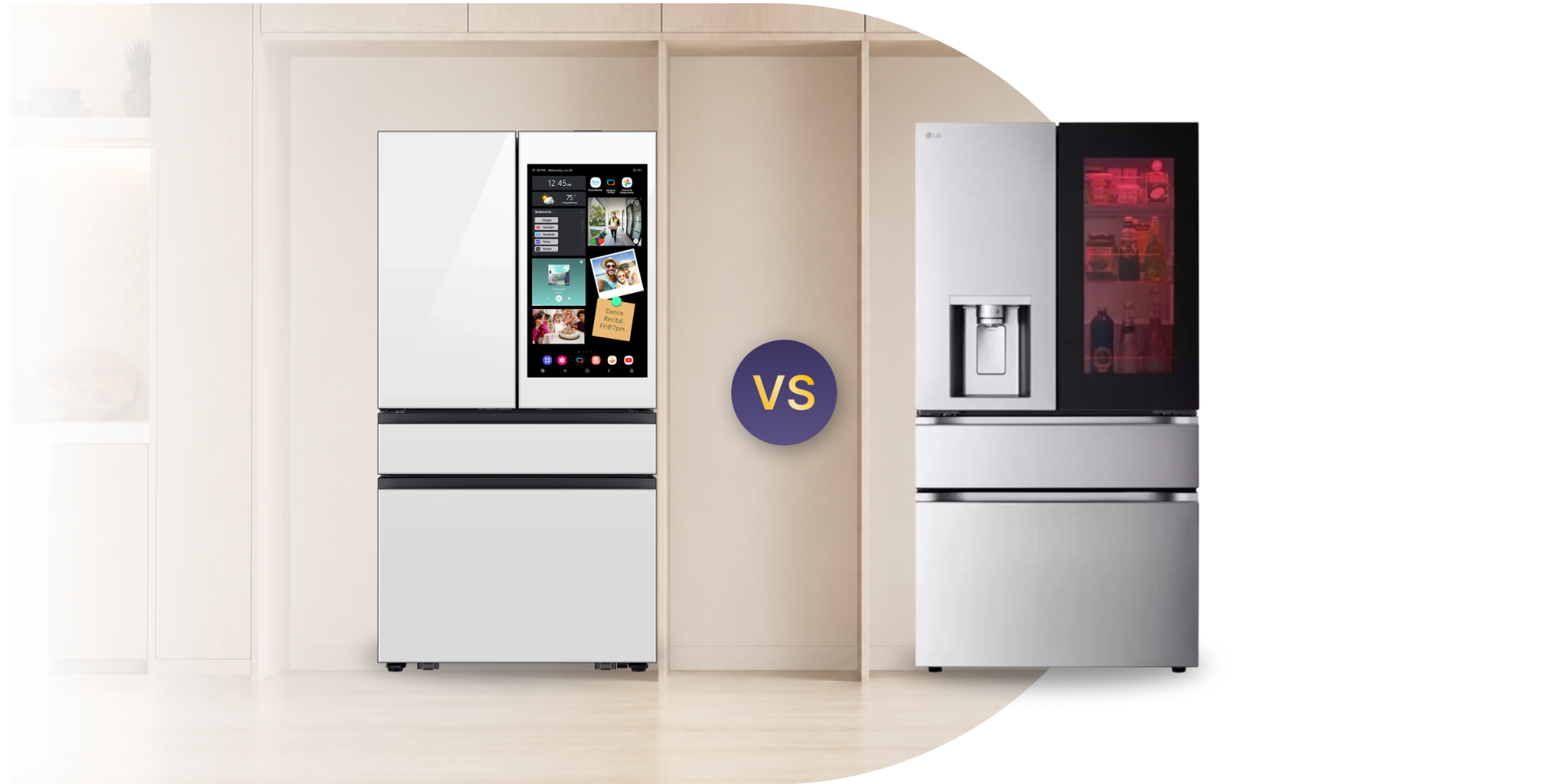

The Samsung RF90F29AEWAA and the LG LF29S8365S are both 29 cu. ft. premium-class French door refrigerators, and both are marketed as “smart.” That word means something very different on each model, though.
Samsung builds its case around AI, a large touchscreen, and an internal camera that can recognize and track certain foods in your refrigerator. LG takes a different approach, combining InstaView Door-in-Door, flexible storage, and ThinQ app connectivity to make everyday refrigerator use more convenient.
Both are smart, just in very different ways. So, which approach to smart refrigeration best fits your kitchen?
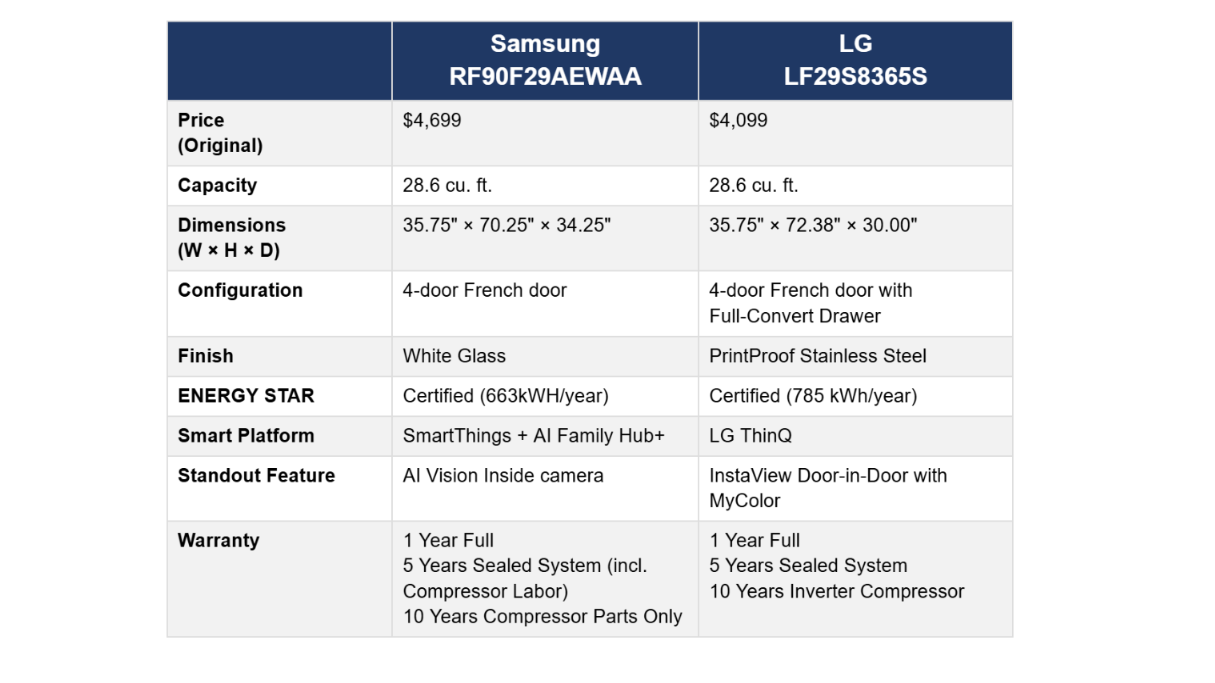
Samsung RF90F29AEWAA vs. LG LF29S8365S at a Glance
Dimensions
Before comparing smart features, make sure both refrigerators can actually fit your kitchen. Despite their different designs, the Samsung and LG are very similar in overall size. Both measure around 36 inches wide, with only small differences in height and depth.
Still, even a difference of an inch can matter, depending on your kitchen layout. Measure the available width, height, and depth carefully, and check the manufacturer's recommended clearances before choosing either model. Don't forget to allow enough clearance for the doors and drawers to open comfortably.
Smart Features
This is the part where the two refrigerators really part ways. It's worth understanding what each brand's approach actually gets you day-to-day rather than just comparing feature names.
AI-Powered Refrigeration by Samsung
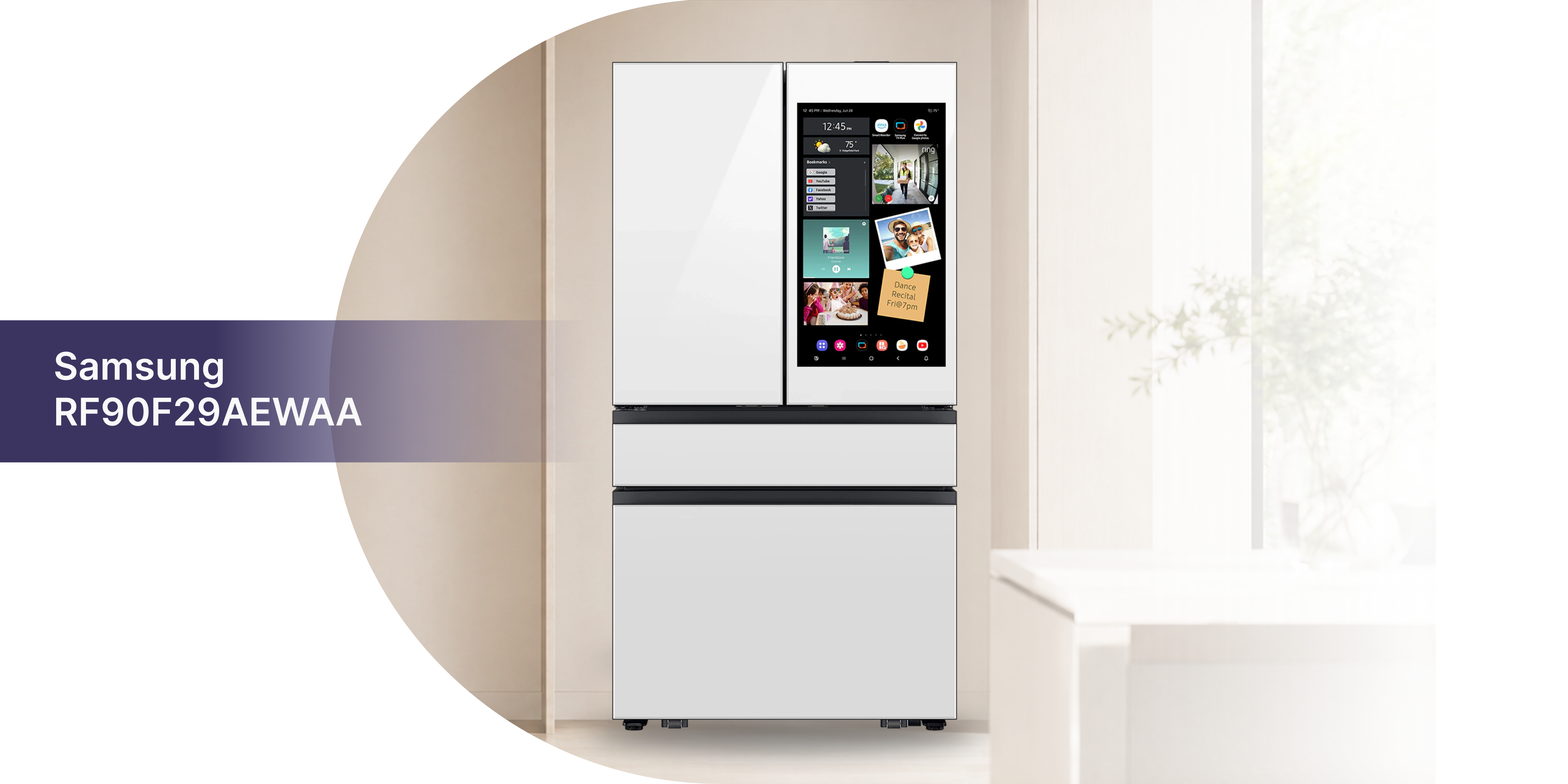
AI Family Hub+ turns the left door of Samsung RF90F29AEWAA into a 32-inch touchscreen. It works less like a fridge display and more like a shared family tablet: streaming apps, a shared calendar, and Tap View, which mirrors your phone's screen onto the fridge so you can pull up a recipe or a photo without touching your phone with wet hands.
AI Vision Inside takes Samsung's smart features a step further. An internal camera can recognize dozens of common fresh foods and automatically track what goes in and out of the fridge. If it can't identify an item or the camera's view is blocked, the item may appear as “unknown,” and you can manually update it in the app.
The feature can then use the foods it recognizes to suggest recipes based on what's available in your fridge through Samsung Food. Samsung has also continued expanding the number of foods AI Vision Inside can recognize, making the feature more useful as its database grows.
Samsung’s SmartThings ties everything together. From the fridge’s screen or your phone, you can control compatible smart home devices, including thermostats and select Ring, Arlo, and Nest products. You can also see and talk to visitors through a connected Ring doorbell and receive notifications from other connected appliances.
Voice control is available through Bixby or Alexa. This level of smart home integration is one of the biggest advantages of the Family Hub+ experience. It also helps explain some of the price difference between Samsung and LG.
Practical Smart Refrigeration by LG
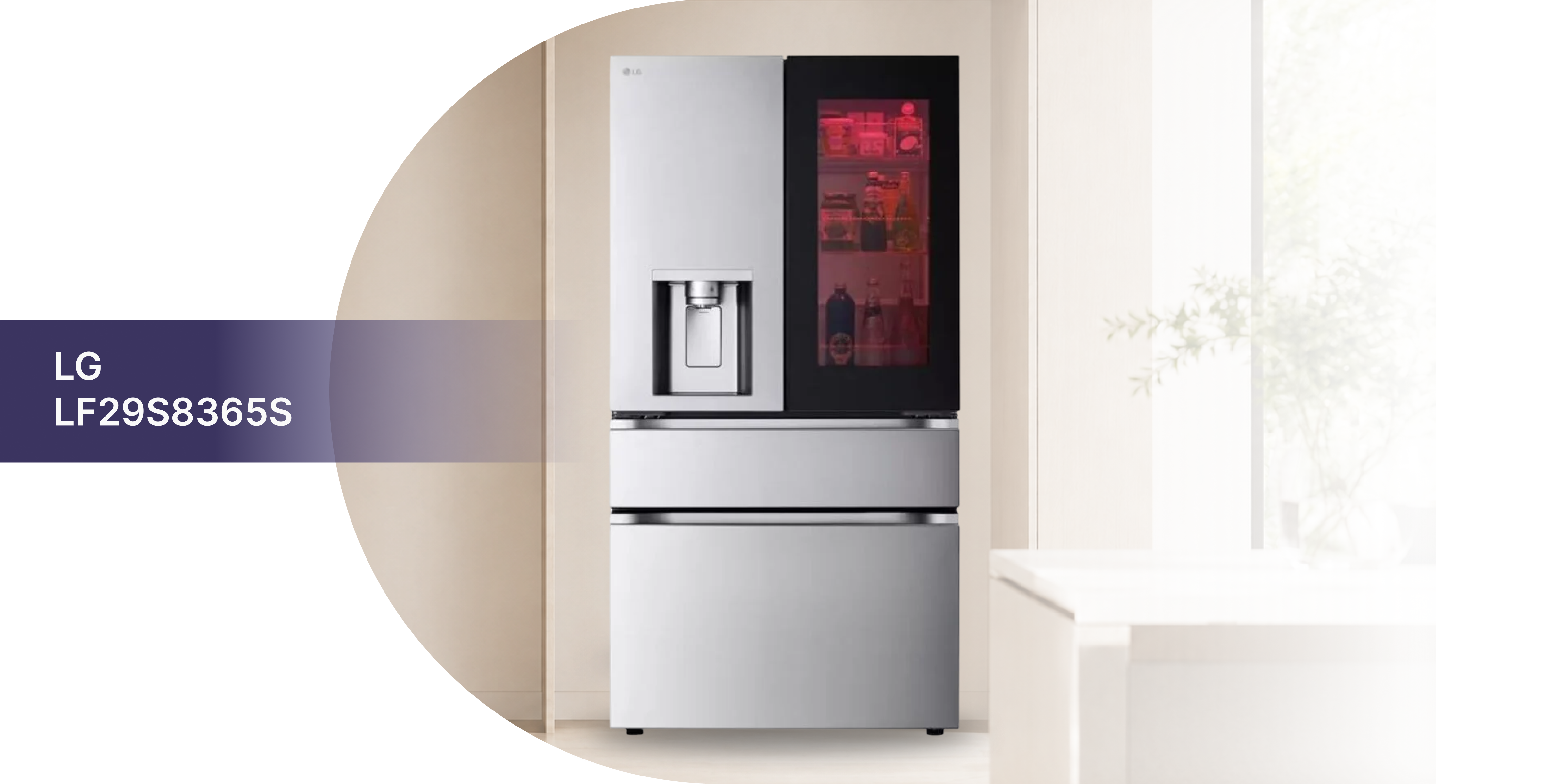
LG's approach skips the screen and the camera entirely. InstaView Door-in-Door on the LG LF29S8365S is a frosted glass panel built into the door. Knock twice, and it lights up, letting you see what's on that shelf without opening the door and losing cold air. It's a simpler idea than AI Vision Inside, but it solves a similar everyday annoyance: standing in front of an open fridge deciding what you want.
MyColor feature lets you change that panel's color in the LG ThinQ app, choosing from five options to match your kitchen or suit your mood that day. It's more of a personalization feature than a functional one, but it's a nice touch that Samsung doesn't offer.
The Full-Convert Drawer is LG's more practical answer to flexible storage: a 3.2 cu. ft. drawer that switches between five temperature settings, so it can serve as extra freezer space for a big grocery haul or a deli drawer the rest of the time.
Connectivity runs through the LG ThinQ app, which lets you monitor the fridge remotely, receive proactive alerts when something needs attention, and view energy usage over time. It’s a useful way to stay connected to your refrigerator even when you’re away from home.
Samsung or LG: Which Smart Refrigerator Should You Buy?
Smart features may get most of the attention, but both refrigerators also come with practical features that matter in everyday use.
LG has a tall water and ice dispenser designed to accommodate pitchers and larger bottles. Its SpacePlus Ice System also keeps the ice maker in the door, preserving more shelf space inside the refrigerator.
Samsung takes a different approach to drinks and ice. The Dual Auto Ice Maker provides two types of ice, while the Beverage Center provides access to filtered water through an internal dispenser and an AutoFill Water Pitcher.
Cooling systems differ as well. Samsung uses Triple Cooling to independently manage temperatures across the refrigerator's three compartments. LG uses a Smart Inverter Compressor along with its cooling technologies to maintain consistent temperatures throughout the refrigerator.
So, which one is right for you?
Choose the Samsung RF90F29AEWAA if you want a more AI-driven and connected refrigerator. AI Vision Inside can help track certain foods, Family Hub+ provides a large touchscreen, and SmartThings connects the refrigerator to compatible devices throughout your home.
Choose the LG LF29S8365S if flexible storage and everyday convenience matter more to you. InstaView lets you see inside without opening the door; the Full-Convert Drawer gives you more storage flexibility; and ThinQ provides remote monitoring and alerts from your phone.
The choice comes down to one main difference: Samsung offers a more AI-focused experience, while LG emphasizes flexible storage and everyday convenience.
Compare Smart Refrigerators at Drimmers Appliances
Still deciding between the two? Price may help narrow down your choice. Based on the original list prices used in this comparison, the LG LF29S8365S is $4,099, while the Samsung RF90F29AEWAA is $4,699. Based on those original prices, the Samsung carries a $600 premium.
As of September 2, 2026, Drimmers Appliances currently lists the Samsung RF90F29AEWAA at $3,199 and the LG LF29S8365S at $2,595. At those prices, the difference is $604.
If Samsung's AI features and smart-home integration are worth the additional cost, the RF90F29AEWAA may be the better fit. If you prefer LG's flexible storage and everyday smart features at a lower price, the LF29S8365S may offer better value for your needs.
Pricing Disclaimer: Prices, promotions, discounts, and availability are subject to change. Explore the latest pricing and availability at drimmersusa.com.