









Outdoor Cooking Basics for Campers
Cooking while camping is part of what makes time outdoors memorable. A warm meal after a long hike, breakfast cooked as the sun comes up, or dinner shared around a fire can turn a simple trip into a great experience.
Outdoor cooking does come with a learning curve, though. You typically have limited space and fewer tools compared to cooking at home, and there's the risk of unpredictable weather to contend with. Campers need to be prepared and flexible, but with the right equipment, planning, and habits, anyone can cook safely and confidently outside.
Essential Equipment When Cooking Outdoors
Having the proper gear makes outdoor cooking easier, safer, and more enjoyable. Camp cooking equipment doesn't need to be fancy, but it should be reliable and suited to the type of trip you're taking.
Cooking Over a Campfire or Grill
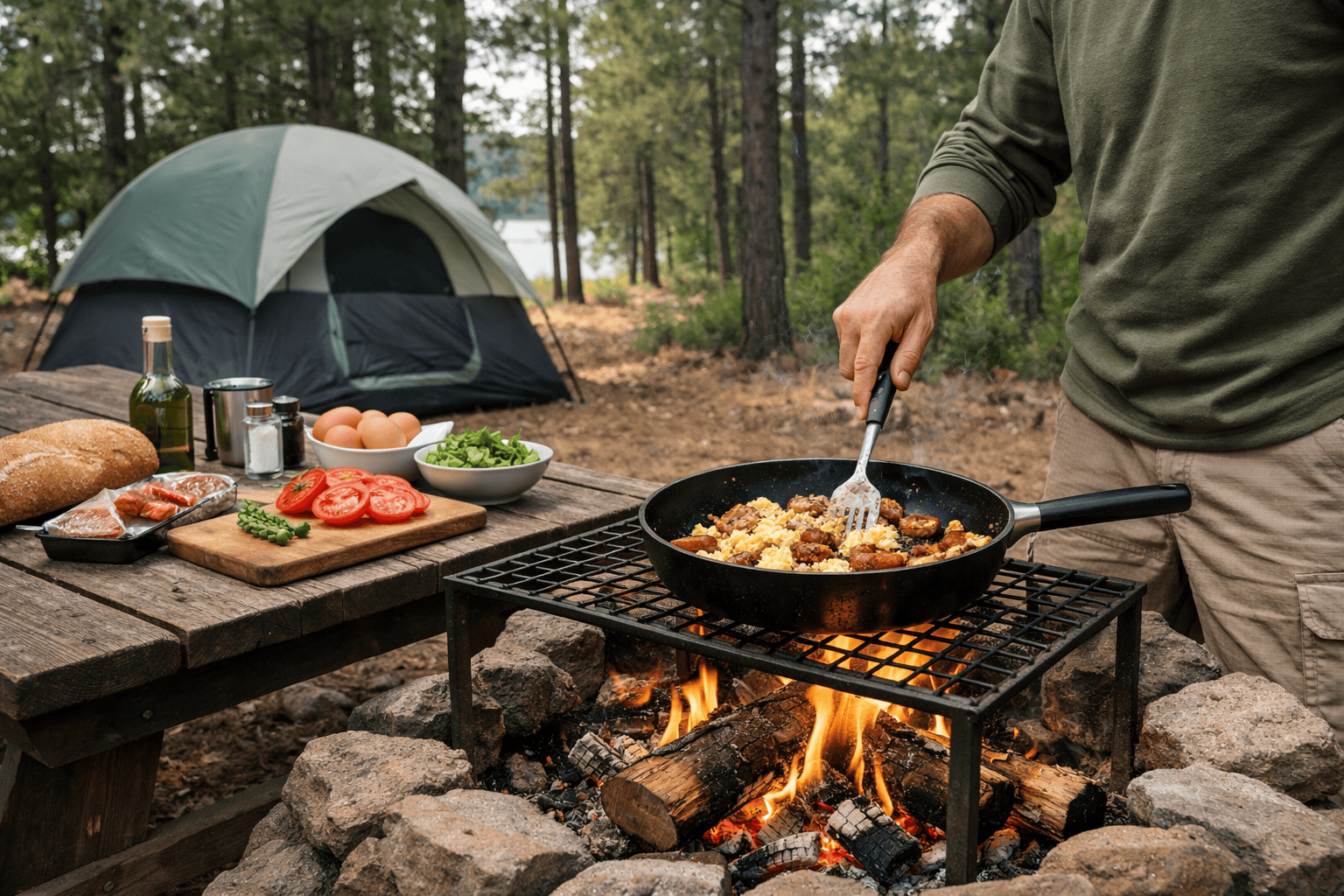
Many campsites include a fire ring or grill grate. Campfires are great for roasting, foil-pouch meals, and simple one-pot dishes, but they require patience and attention. Portable camp grills or backpacking stoves offer more control over the flame, which helps prevent burnt food and undercooked meals.
Fuel Source
If you want to start a campfire, use only locally sourced, dry wood. Camp stoves usually run on propane or butane, while grills may use charcoal. Always bring more fuel than you think you'll need, especially for longer trips; cold weather and wind can cause fuel to burn faster than expected.
Cookware and Utensils
Lightweight pots, pans, and cooking tools designed for camping are best. Nonstick surfaces make cleanup easier, and nesting cookware saves space. Basic tools like a knife, cutting board, spatula, tongs, and a stirring spoon are usually enough for most meals.
Cleaning Supplies
A small sponge, biodegradable soap, paper towels, and trash bags are essential. Many campsites have wash stations, but some require campers to clean dishes right where their tent is pitched. Bringing a collapsible wash basin can be helpful.
Plan Meals Before You Go Camping
Good camp meals start long before arriving at the campsite. Planning ahead saves time, reduces waste, and helps avoid the stress of figuring out meals when you're tired, hungry, and far from a grocery store.
Start by deciding how many meals and snacks you'll need for each day. Consider your activity levels, since hiking, swimming, and exploring increase your appetite. Simple meals work best outdoors, especially those with minimal ingredients and steps.
Prepping food at home can make a big difference. Chopping vegetables, marinating meats, or measuring spices ahead of time cuts down on prep work at camp. Store ingredients in labeled containers or resealable bags to stay organized.
Portioning meals properly also matters. Bringing too much food adds unnecessary weight and leads to waste, while too little leaves everyone hungry. Plan servings carefully and include easy snacks like trail mix, fruit, or granola bars to fill gaps between meals.
Cooking Meals While Outdoors
Outdoor cooking requires you to adjust to the environment. Wind, uneven surfaces, and changing temperatures all affect how food cooks, so patience is key. Always set up cooking equipment on stable ground away from tents and flammable items. When you're cooking over a campfire, wait until the flames die down and glowing coals remain; coals provide steady heat and are safer than open flames. Stir food regularly as it cooks, and monitor the heat closely to avoid burning.
Food safety is just as important outdoors as it is at home. Keep raw meat stored in a cooler with ice packs, the next-best thing when you don't have a fridge, and cook it thoroughly. Wash your hands or use hand sanitizer before handling food. And never leave cooked food out for long periods.
- Campfire Safety Tips
- Outdoor Fire Safety
- Campfire Cooking Guide
- Outdoor Cooking and Food Safety
- Food Safety While Camping
Campsite Hygiene and Cleaning Your Cookware
Cleaning up may not be the most exciting part of camping, but it's one of the most important. A clean campsite keeps wildlife away and makes the experience safer for everyone.
When you're done eating, scrape leftover food into a trash bag and seal it tightly. Wash dishes with warm water and biodegradable soap, then dispose of wastewater according to campsite rules, usually in designated drains or at least 200 feet away from drinking water sources.
Wipe down cooking surfaces and store food securely after every meal. Never leave scraps or wrappers out overnight, as they'll attract animals. Before leaving camp or going to sleep, do a final check to make sure everything is clean and packed away.