








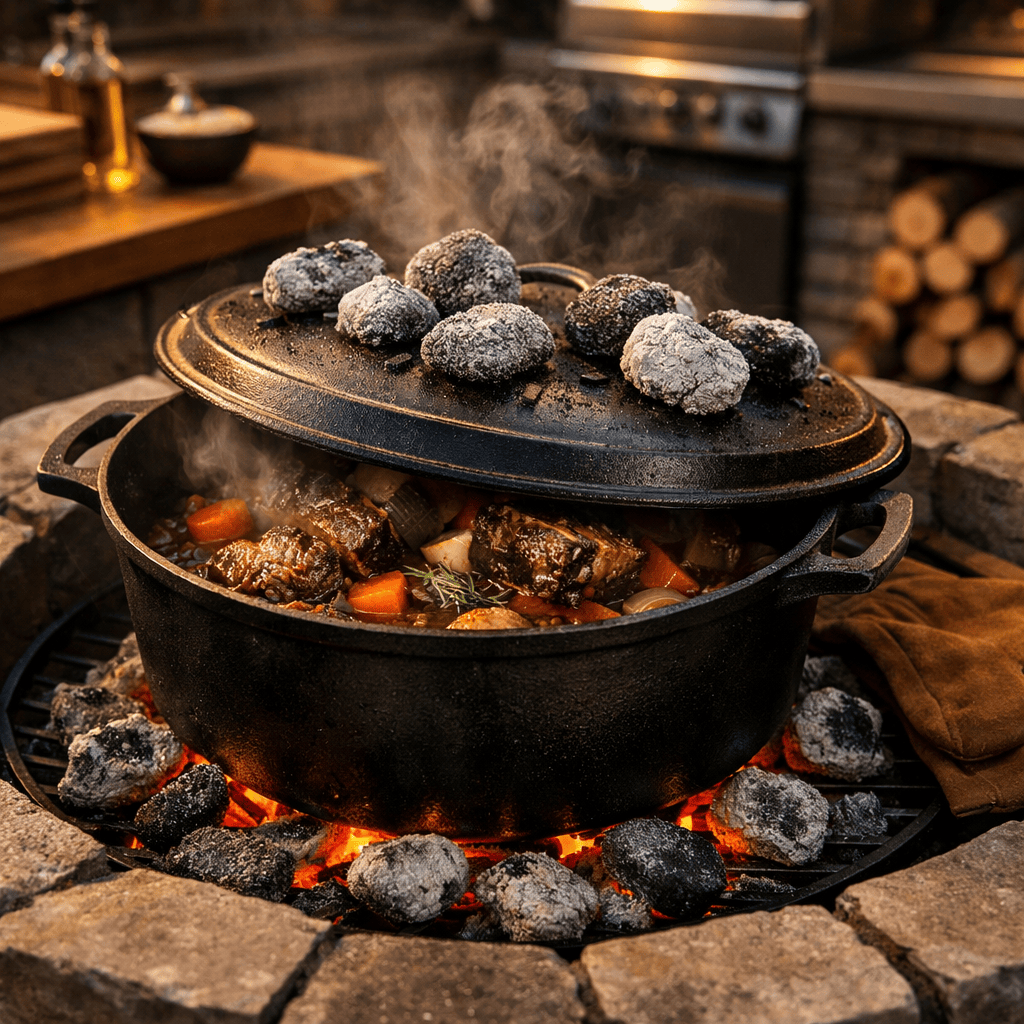

Dutch Oven Recipes for Your Outdoor Kitchen
Anyone who enjoys outdoor cooking will eventually come to appreciate the versatility of the Dutch oven. While modern gas grills and pizza ovens have their place, the heavy cast-iron Dutch oven is the only tool that allows you to bake, braise, roast, and stew over an open flame or charcoal with the same precision as an indoor range. Using this heavy-duty cookware allows you to expand your backyard menu far beyond standard grilled fare, moving into the realm of slow-cooked comfort foods and artisan breads.
Successfully integrating Dutch oven cooking into your outdoor routine requires a blend of traditional firecraft and modern food safety practices. By understanding how to manage heat and maintain your gear, you can transform a simple backyard gathering into a high-end culinary experience using the unique thermal properties of cast iron.
Setting Up for Safe and Successful Outdoor Cooking
When you move your kitchen outdoors, your heat source becomes an active variable in your cooking process. Cooking over a campfire requires much more attention than an oven or even a standard portable grill.
Wood
For Dutch oven cooking, the goal is consistent, long-lasting heat. Hardwoods like oak, hickory, or maple produce coals that stay hot for hours, which is essential for braising. If you're using a charcoal-based setup in your outdoor kitchen, high-quality lump charcoal provides the most predictable temperature control.
Fire Location and Stability
Dutch ovens are incredibly heavy when filled to capacity, so you'll need to make sure that your cooking surface is level and sturdy enough to support the weight of the pot. If you're building a fire on the ground, use a tripod or a heavy-duty fire grate to prevent the fire from spreading. Always maintain a clear zone of 10 feet around your fire to prevent stray embers from igniting patio furniture or dry debris.
Wind Management
A strong breeze can draw heat away from the sides of your pot, resulting in uneven cooking or raw centers. If your outdoor kitchen isn't shielded, use a windbreak or a deep fire pit. Wind also accelerates the rate at which coals burn out, requiring you to replenish fuel more frequently than on a calm day.
How to Build a Campfire
A cooking fire is structurally different from a standard bonfire. For a Dutch oven, you want a concentrated, flat bed of coals. The "log cabin" method is best for this: Stack logs in a square shape, allowing the center to burn down into a deep reservoir of glowing embers. This provides a stable surface where you can nestle the pot directly into the heat for high-temperature searing or low-temperature stewing.
- Guide to Building a Campfire
- Minimize Campfire Impacts
- Your Guide to Building a Safe Campfire
- Campfire Rules and Safety
- Eight Steps to Building a Better Fire
- Campfire Shapes and Types
Campfire Safety
When cooking outdoors, safety begins long before you strike a match. To prevent the spread of devastating invasive pests like the emerald ash borer, always buy your wood where you burn it or gather it locally; never transport firewood over long distances. Once you've sourced your wood, keep your fire contained within a designated metal ring or a cleared pit at least 15 feet away from tents, low-hanging branches, and dry grass. Use small sticks or natural fire starters to build the flame rather than gasoline, and never leave the fire unattended, even for a moment. Before you pack up, douse the embers with water, stir the ashes, and douse them again until everything is cool to the touch; if it's too hot to touch, it's too hot to leave.
Leave No Trace and Environmental Ethics
Sustainable outdoor cooking means leaving the land exactly as you found it. If you are cooking in a backyard, this includes proper ash disposal. Never dump hot ashes into a plastic bin or near dry vegetation; cool them completely and then put them into a metal container. In the wild, burn all wood completely to ash, then scatter the cold remains only after they are fully extinguished and cool to the touch.
- Leave No Trace: The Seven Principles
- Outdoor Ethics
- Protecting Public Lands
- Responsible Outdoor Recreation
Food Safety in Your Outdoor Kitchen
Maintaining the cold chain is the biggest challenge when preparing meals away from home. Bacteria thrive in the "danger zone" between 40°F and 140°F, so keep your ingredients in the refrigerator until right before you leave, then transfer them to a cooler with plenty of ice. Once you're at camp, you can prepare your recipes, making sure that the food in your Dutch oven reaches the proper internal temperature by using a reliable probe thermometer. Because cast iron heats slowly but holds heat well, be careful not to overcook the exterior of your food while leaving the center underdone.
- Food Safety for the Great Outdoors
- Get Ready to Grill Safely
- Safe Food Handling at Home and Outdoors
- Grilling and Outdoor Food Safety
- A Short Guide to Food Thermometers
Dutch Oven Recipes and Outdoor Cooking Techniques
The magic of the Dutch oven is its ability to act as a portable oven. By placing coals on the lid and beneath the base, you create a 360-degree heating environment suitable for complex recipes. A common rule of thumb for baking is the "three-up, three-down" method. The number of coals on top of the pot should be equal to the diameter of the pot plus three, and the number of coals beneath the pot should be equal to the diameter of the pot minus three. For instance, if you're using a 12-inch Dutch oven, you'd place 15 coals on top and 9 beneath it. The result should be a 350°F environment for your pot, the equivalent of an oven set at 350°F. This formula enables you to bake a wide range of treats, from biscuits to cobblers, with remarkable accuracy.
Essential Dutch Oven Recipes
- Slow-Braised Short Ribs: Searing the meat directly in the pot before adding aromatics and liquid allows the heavy lid to lock in moisture for a five-hour braise.
- Artisan No-Knead Bread: The cast iron walls simulate a professional stone oven, trapping steam to create a thick, crunchy crust and an airy interior.
- Mountain Man Breakfast: A classic one-pot meal of layered hash browns, sausage, onions, and eggs feeds a large group with minimal cleanup.
- Deep-Dish Pizza: Using the high walls of the pot for support, you can create a thick, caramelized crust that withstands heavy toppings.
- Dutch Oven Chili Con Carne: Slow-simmer peppers, beef, and spices for hours to allow flavors to meld in a way that standard pots cannot achieve.
- Whole Roasted Chicken: Place the bird on a bed of root vegetables to roast in its own juices, protected by a heavy cast-iron lid.
- Sourdough Cinnamon Rolls: Use the even heat of the coals to proof and then bake sweet rolls to a perfect golden brown.
- Beef Bourguignon: A sophisticated French classic adapted for the coals, this recipe relies on steady heat to tenderize meat in a rich wine sauce.
Additional Outdoor Recipes
- Heritage Recipes
- Dutch Oven Spanish-Style Chicken
- Dutch Oven Recipes
- 12 Dutch Oven Meals for Camping
- Dutch Oven Cooking