








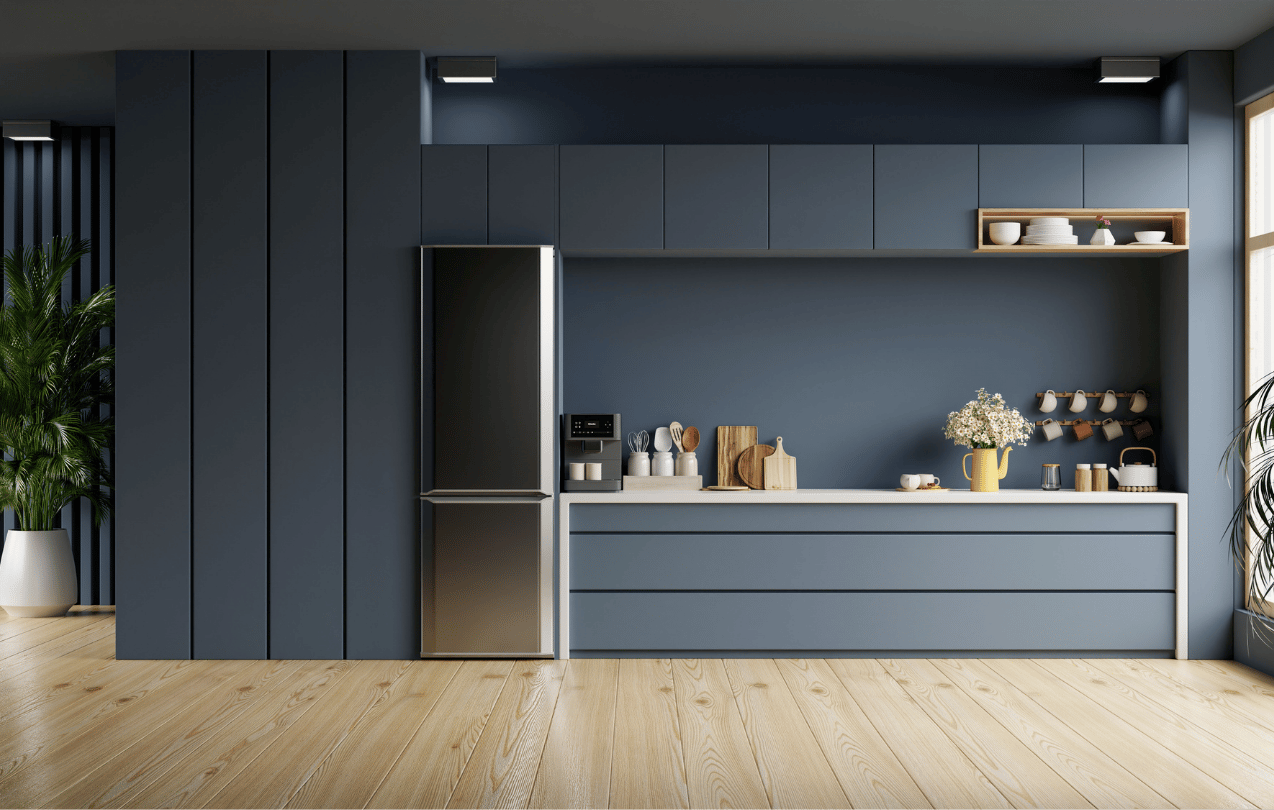

In Miami, refrigeration is never “just refrigeration.” You either design it to read as a pro-style statement—bold metal, a pro range, and an unmistakable luxury signal—or you make it disappear into a furniture-forward elevation where the cabinetry feels architectural.
That’s why built-in kitchen appliances matter so much in South Florida. For your design team, “built-in” doesn’t mean sliding a unit into an opening and calling it done. You plan refrigeration as part of the millwork system—panel specs, reveals, hardware, airflow, and service clearances—before cabinet drawings lock.
When you choose between panel-ready column refrigeration and a Sub-Zero built-in refrigerator, you’re not just picking a look. You’re specifying Sub-Zero appliances that shape layout and workflow, the cabinet package, and the installation timeline—especially on Miami projects where site conditions and logistics can be unforgiving.
This guide compares both options through the lens of Miami projects' demand: design intent, planning constraints, client fit, and local realities.
Key Takeaways
- Columns (panel-ready appliances) give you maximum freedom to create invisible, furniture-forward kitchens—especially in Miami condos where layout customization matters.
- A Sub-Zero built-in refrigerator delivers classic luxury presence and predictable planning—but requires careful coordination for clearances, ventilation, and door swing.
- Miami adds pressure—humidity, salt air, and strict delivery windows—so tight specs and sequencing protect the schedule and the cabinetry budget.
Two Luxury Integration Paths Designers Actually Specify
Sub-Zero Built-In Refrigerators (Classic Statement)
A traditional Sub-Zero built-in refrigerator is the "clients recognize it instantly" option. Specify a built-in when you want:
- An immediate luxury signal that reads at a glance
- A proven, predictable format for premium kitchens
- A strong refrigeration anchor that complements a pro-forward design language
Built-ins tend to shine when the kitchen already features statement elements—pro ranges, dramatic stone, metal accents, and bold lighting—and you want refrigeration to contribute to that high-performance feel.
Column Fridge and Freezer (Panel-Ready, Fully Integrated)
A column fridge-and-freezer configuration gives you a modular, design-first approach. Instead of a single large unit, specify separate refrigerator and freezer columns, size them to the layout, and integrate them behind matching cabinetry panels using panel-ready refrigerators designed for full-height, furniture-forward installations. This approach also lets you fine-tune depth alignment across tall runs, keeping the elevation clean and consistent.
Choose columns when you need:
- Proper seamless integration for "invisible" elevations
- Maximum layout flexibility (split, centered, or balanced across a wall)
- A furniture-like composition where refrigeration supports the architecture rather than leading it
Columns are especially effective in minimalist briefs—slab fronts, soft matte finishes, hidden pulls, and clean reveal lines—where uninterrupted surfaces carry the design.
Aesthetics and Layout Flexibility
"Pro-Style" Statement Kitchens
When the kitchen should feel like a performance space, let refrigeration stay visible. Built-ins work best when you want the appliance suite to read as intentional—not concealed—especially alongside:
- Pro-style ranges or bold cooking suites
- Metal accents or mixed materials
- High-contrast stone with dramatic veining
"Invisible" Furniture-Forward Kitchens
If you're designing a Miami kitchen that should read like millwork—not appliances—panel-ready columns deliver the cleanest result. They let refrigeration disappear into:
- Continuous cabinet planes
- Balanced, symmetrical elevations
- Quiet-luxury details like minimal reveals, concealed hardware, and tone-on-tone finishes
Planning for Symmetry and Elevation
Columns also give you more control over the composition. Use them to:
- Flank an oven tower, pantry, or coffee station
- Create symmetry across a wall
- Align refrigeration with tall storage zones for a cohesive elevation
A single built-in can simplify the elevation, but columns give you more options to shape the kitchen's architecture—especially in high-end integrated designs.
Planning Constraints That Decide the Project (Not the Mood Board)
Built-in refrigeration succeeds when you validate door swing, panel details, airflow, and key dimensions during design development—before drawings lock. That's how you avoid late-stage adjustments that ripple through millwork, finishes, and the install schedule.
1. Clearance and Door Swing Reality Check
Door swing is where high-end kitchens break down—especially in Miami condos where islands are fixed, aisles run tight, and every inch counts. Verify:
- Swing arcs into aisles and islands
- Adjacent walls and tall pantry runs
- How to handle projection changes in real-world clearance
Common issues include underestimated panel thickness, oversized pulls, tight island offsets, and corner placements that look fine in elevation but fail in plan.
2. Cabinet Integration: Panels, Reveals, and Hardware
Panel-ready refrigeration isn't "add a door." It's a millwork system. Get it right by locking in:
- Panel specs (thickness, rigidity, finish)
- Consistent reveals and alignment across tall runs
- Hardware that balances clean lines with daily usability
3. Ventilation / Airflow and Heat Management for Built-In Refrigeration
Trade reality: don't cabinet it to death. Built-in refrigeration performs best when you follow the manufacturer's ventilation instructions and keep the unit serviceable.
Keep it simple:
- Plan airflow and clearances per spec early
- Treat refrigeration as a system that needs to breathe, not a box you hide
- Coordinate the details across millwork, HVAC, and installation before drawings lock
Client Fit: Match the Refrigeration to the Property and the Client
Condo vs. Single-Family in Miami
In condos, you design with the building in mind. Plan for:
- Elevator and loading dock schedules
- Tight hallways and turns
- Limited staging space
- Restricted delivery windows
Panel-ready columns often work best here because they support cleaner, more flexible layouts—especially when you integrate refrigeration into a tall pantry wall. Just don't ignore logistics. If the building has strict window requirements, line up delivery and installation early to avoid losing your slot.
Single-family homes give you more breathing room:
- Easier access and staging
- Broader layout options
- More tolerance for statement compositions.
Entertainer vs. Minimalist
Let lifestyle drive the call.
- Entertainers usually want capacity and workflow—where a visible built-in can serve as the kitchen's "luxury anchor."
- Minimalists want continuous surfaces—where columns deliver the cleanest, most furniture-forward elevation.
Resale and ROI Considerations
Both options sell—just in different ways.
- A built-in refrigerator signals recognizable luxury that's easy to understand at resale.
- Columns signal custom, design-forward execution—especially when the kitchen reads like furniture.
Miami Realities: Humidity, Salt Air, and Site Logistics
Coastal Conditions and Material Choices
For Miami Beach and waterfront projects, specify with the environment in mind—durable finishes, quality hardware, and detailing that withstands salt air. If your design includes exposed stainless steel, confirm the finish and support structures to ensure long-term durability in coastal conditions.
Humidity and Daily Use
High humidity makes installation discipline non-negotiable. Plan for clean alignment, proper sealing, and airflow/service access that follows the spec—especially if the client expects features like ice makers, which add another layer of planning and service considerations.
Scheduling and Delivery Windows
Miami projects often stall because refrigeration arrives at the wrong time—or can't reach the site. Account for:
- Elevator and loading dock schedules
- Tight hallways and turns
- Limited staging space
- Restricted delivery windows
Sequence delivery with cabinetry and flooring, and coordinate across trades so the install doesn't get rushed. Drimmers can support your team with a project-ready approach—helping confirm requirements and align timing with the build schedule.
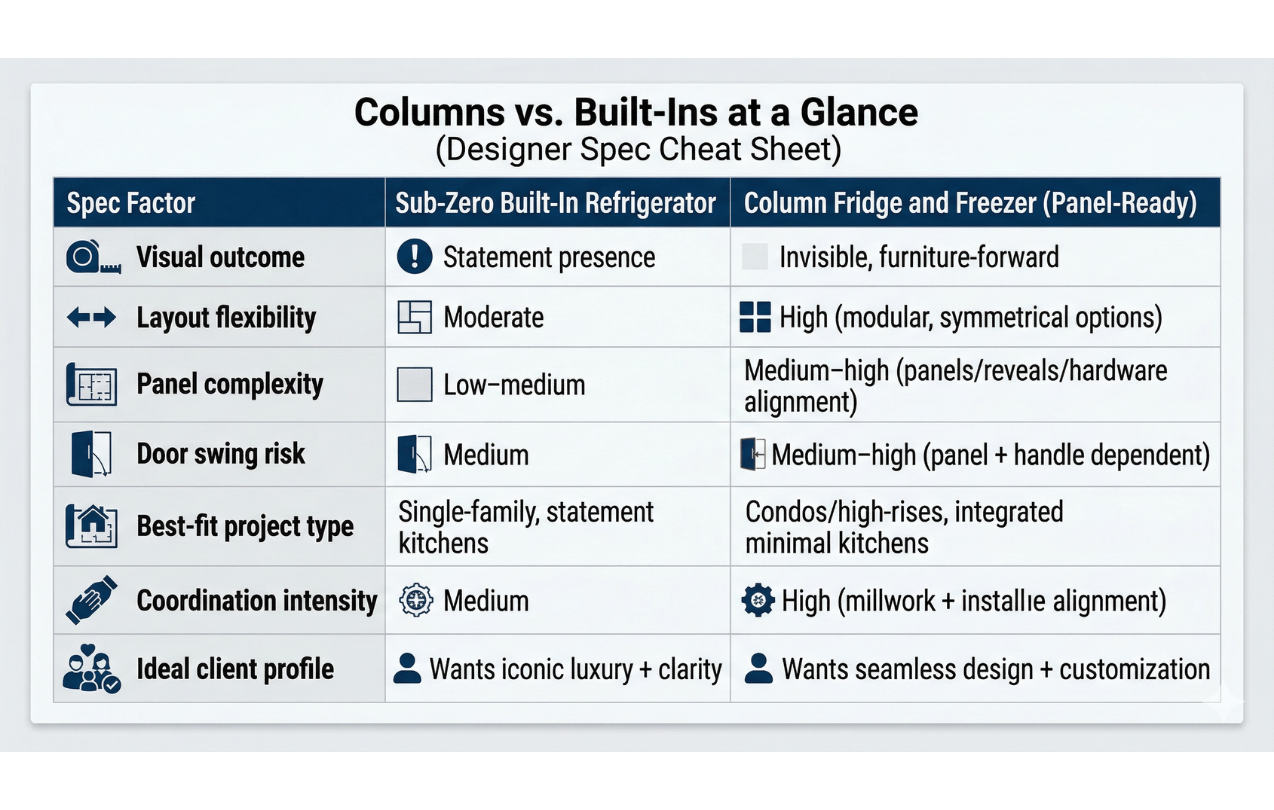
Columns vs. Built-Ins at a Glance (Designer Spec Cheat Sheet)
Use this as your quick decision tool—compare Sub-Zero built-ins and panel-ready columns across the spec factors that most often impact design intent, coordination, and install success in Miami projects.
Designer's Specification Checklist
Use this before drawings lock:
- Verify Constraints: Aisles, adjacent walls, island offsets, door swing arcs
- Lock the Panel Strategy Early: Material, thickness, reveals, hardware projection
- Plan Sequencing: Cabinet delivery, appliance delivery, final set schedule
- Confirm Miami Logistics: Access rules, staging space, elevator bookings, delivery windows
- Align the Team: Designer, GC, millworker, installer, and appliance partner on one plan
Bringing It Home: A Better Spec Decision for Miami Projects
Make the refrigeration choice that matches your design intent and the realities on site.
Choose column refrigeration when you need symmetry, flexibility, and a truly integrated “invisible” elevation—especially in condo projects where clean lines and tight footprints rule. Choose a Sub-Zero built-in refrigerator when you want an iconic luxury presence and a straightforward anchor that supports a pro-style composition. Either way, treat Sub-Zero appliances as part of the millwork plan—not a late-stage add-on.
Miami doesn't reward late changes. Lock clearances, panels, airflow, and sequencing during design development to protect the schedule and the cabinetry budget. Drimmers supports your team with spec-first guidance, Miami site awareness, and project-synced coordination.
Ready to start designing? Join the Drimmers Pro Program for exclusive pricing.
Frequently Asked Questions About Built-In Kitchen Appliances
1. Which kitchen appliances can be built in (and which should stay freestanding)?
Most refrigeration, wall ovens, cooktops, dishwashers, and wine/undercounter units—including undercounter refrigerators—can be built in. Freestanding often makes sense for ranges when you want a pro-style statement—or when flexibility and quick replacement matter.
2. What's the most common planning mistake with panel-ready appliances?
Treating the appliance like a standard cabinet. Teams often underestimate panel thickness/weight, handle projection, and reveal alignment—leading to door-swing conflicts or last-minute millwork revisions. Always confirm that panels and hardware align with adjacent millwork and kitchen countertops to keep the elevation clean.
3. When should the installer be involved in the design and spec process?
Early ideally before you finalize cabinet drawings. Installing inputs during design development helps confirm clearances, ventilation strategy, and sequencing, so you don't uncover conflicts when the appliances arrive.